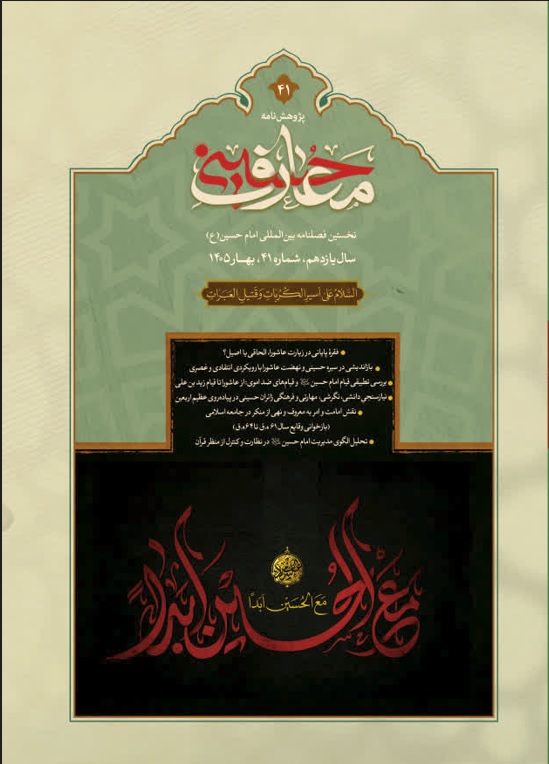
پژوهشنامه معارف حسینی

پژوهشنامه معارف حسینی

فقرۀ پایانی در زیارت عاشورا، الحاقی یا اصیل؟

نویسنده
دانش‌آموختۀ خارج فقه حوزۀ علمیه، تهران
چکیده
برخی ادعا کرده‌اند، لعن‌های پایانی زیارت عاشورای مشهور، در اصل در این زیارت موجود نبوده و از دوران صفویه به‌بعد به ‌مصباح‌المتهجد تألیف شیخ طوسی قدس‌سره (م۴۶۰ق) افزوده و در نتیجه، زیارت عاشورا تحریف شده است. مهم‌ترین دلایل مدعیان برای اثبات تحریف در زیارت عاشورای مشهور، دو مورد است؛ نخست، عبارت کهن‌ترین نسخۀ خطیِ مصباح‌المتهجد (نسخۀ نقاش رازی)؛ دوم، عبارت کامل‌الزیارات. در این پژوهش با دلایل و شواهد گوناگون نشان داده شد تنها عاملی که سبب ‌شد فقرۀ پایانی زیارت عاشورا در برخی منابع این زیارت، ازجمله مصباح‌المتهجد (نسخۀ نقاش رازی) و کامل‌الزیارات مطابق مشهور نقل نشود، این است که کاتبان و عالمان شیعه، به‌ویژه پیش از حکومت صفویان در نقل آن عبارات، تقیه کرده‌اند. در پژوهش حاضر برای حل اشکال در نسخه‌هایی که فقرۀ پایانی در آن‌ها مطابق مشهور نیامده است، بیان کرده‌ایم که در آن نسخه‌ها از سوی کاتبان یا عالمان، تقیه رخ داده است. همچنین برای اثبات اصالت فقرۀ پایانی در زیارت عاشورا، تصاویر صفحات زیارت عاشورا در نسخۀ بسیار مهم و معتبر مختصرالمصباح به‌خط ابن سَکون حلّی (م ۶۰۰ق) ـ که لعن‌های پایانی نیز در آن آمده است ـ ارائه کرده‌ایم. در نهایت، در این نوشتار نشان داده شد، فقرۀ پایانی زیارت عاشورا، که برای اظهار برائت از دشمنان اهل‌بیت  صادر شده، از اصالت برخوردار است.
کلیدواژه‌ها

عنوان مقاله English

The Final Fragments of the Ziarat Ashura: Authentic or a Later Addition?

نویسنده English

Sayyid Mahdi Mahmoudi
tehran
چکیده English

The well-known Ziarat Ashura is a famous pilgrimage prayer, issued and taught by the Infallible Imams Muhammad al-Baqir and Ja'far al-Sadiq, hence widely anthologized in Shii hadith sources. As for its final fragment, some people cast doubt and claim that its final curse-phrases had not been authentically part of the original text. Rather they claim that they were later additions to the text earlier anthologized in Misbah al-Mutahajjid of Sheikh al-Tusi (d. 460 AH/ 1067); therefore, the Ziarat Ashura had been subject to textual distortion. The claimants reason that it had not been thus as indicated in a previous manuscript of Misbah al-Mutahajjid (the Naqqash Razi's second codex). Their second reason pertain to the cotext of the same text as anthologized in Kamil al-Ziyarat. Notwithstanding such reasons, it is proved in the article that applying and resirting to dissemulation (taqiyyah) by pre-Safavid Shii scribes and leading ulema had been the prime reason for such a misunderstanding. To illustrate that the version had not originally been subject to dissemulation, facsimiles of Mukhtasar al-Misbah, as transcribed by Ibn Sakkoun al-Hilli (d. 600 AH/ 1203) are reprinted wherein the final curse-phrases appear in the text. It follows that the ziarat-final curse phrases prove the renunciation (tabarri) article of faith that concern the foes of the Ahl al-Bayt.

کلیدواژه‌ها English

renunciation (tabarri)
dissemination (taqiyyah)
ulema's practices of dissemination
Ziarat Ashura
codicology